Jazz Dance Classes in Brighton
Jazz dance classes in Brighton with the theatre in them and the audition anxiety left out: isolations, jazz walks, a proper kick, a turn that lands where you meant it to. Adults of any starting point, technique before repertoire, and no showcase waiting at the end of term. £10 a class or £32 for a four-week block. The class opens once its interest list is deep enough — join it and you hear the date first.
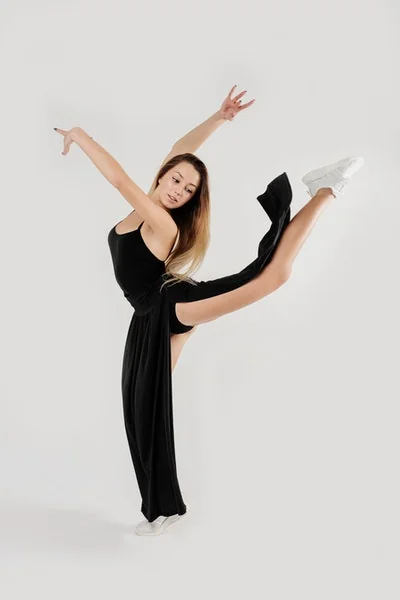 Jazz · sharp, musical, adult
One list, one evening,
and jazz is running.
Jazz picks up a particular kind of signup: people who did it until they were sixteen and have been quietly missing it ever since, alongside people who never got a go at all. Both are welcome and both get the same email when the numbers work — evening, central studio address, a line about shoes. Signing up asks nothing further of you.
- Priced at £10 a class when live, or £32 for the four-week block
- Bare feet, jazz shoes or soft trainers all work in this room
- No audition, no placement test, no dividing the room by ability
 Lines and lifts of the chin · studio
A quick summary of what launches when the list fills.
- WhereCentral Brighton, a few minutes on foot from the station — address confirmed at launch
- WhenAn evening each week, fixed as soon as the numbers hold up
- Level & agesBeginners and rusty returners in one room · 17–75 · no partner
- Cost£10 drop-in · £32 for four weeks (£8 a class)
Jazz is the style that teaches you to be watched.
What sits inside the hour
A jazz class has a recognisable spine: a warm-up that isolates each part of the body in turn, then a centre section of jazz walks, kicks, pirouettes and the small sharp gestures that give the style its wit, then a phrase across the floor to finish. Everything is front-facing and everything has an attitude attached. Where other styles ask you to feel something, jazz asks you to project it — which is oddly liberating for anyone tired of being told to relax.
Rusty is a normal condition here
A large share of the people who come to adult jazz did it at school, gave it up at sixteen for exams or a job, and have spent years assuming the door closed. It didn't. Bodies remember more than they let on, and the material is taught from the first isolation upwards so a genuine first-timer standing beside a former teenage dancer is a completely workable arrangement. The nearest thing to it on our timetable is contemporary, which trades the sharpness for weight and floorwork — people frequently do one and then add the other.
What people do with it
Mostly nothing: they come on a weeknight, work hard for an hour and go home pleased with themselves, which is a perfectly good reason to take a class. Some use it as the technique underneath everything else on the Brighton class list, since jazz vocabulary turns up in musical theatre, in commercial routines and in half the choreography anybody will ever teach you. A few arrive with a deadline — a big number to learn, or a first dance that needs more personality than a shuffle — and the class buys them the control to pull it off. The room draws from Hove, Kemptown, Preston Park, Churchill Square's end of town and the commuter belt out past Lewes.
A four-week block, roughly.
The room sets the paceIsolations
Head, shoulders, ribs and hips moving one at a time. Ridiculous to watch, foundational to everything after it.
Across the floor
Jazz walks, chassés and a kick that goes where you sent it rather than where momentum fancied.
Turning
Spotting, then a single pirouette, then landing it without a small apologetic hop.
A phrase with attitude
Thirty-two counts of actual choreography, performed to the front, with the chin up on purpose.
That's the broad arc and not a syllabus — every teacher choreographs their own material and spends the time wherever the room needs it.
Jazz, answered.
No dodging the question about when it opens.
I stopped dancing at sixteen. Is that a problem?+
It's the most common story in an adult jazz room, and it is an advantage rather than a handicap — old training resurfaces surprisingly fast. The class is taught from the ground up regardless, so nobody is relying on what you remember.
What kind of jazz is this exactly?+
Theatre-flavoured jazz: strong lines, isolations, sharp accents and a bit of showmanship, closer to a stage number than to a music video. Teachers bring their own leanings, so some weeks land nearer the classic end and some nearer the contemporary one.
Do I need to be able to do the splits?+
You do not, and anyone teaching otherwise is showing off. Kicks are taken to whatever height your hamstrings currently agree to, and control matters far more than altitude — a clean waist-high kick beats a wild one every time.
How does jazz differ from the commercial class?+
Commercial chases whatever is current and lives in music-video shapes. Jazz is the older technique sitting underneath a lot of that: a fixed vocabulary, a formal warm-up and a strong bias towards line. Learn jazz and commercial gets easier; the reverse is less reliably true.
When is the Brighton jazz class likely to begin?+
When its list holds enough people to fill a studio — we launch classes off real demand rather than a printed timetable, and jazz tends to gather at a steady middling pace. Everyone registered is told the date before it appears publicly.
What am I paying?+
£10 for one class on the night, or £32 for four weeks in a row, which lands at £8 a session. The interest list itself is free and joining it never generates a charge.
Do I need jazz shoes?+
Not to start. Bare feet, socks with grip or a soft flat trainer are all fine, and plenty of people never buy anything at all. Shoes and kit aren't something we sell, lend or hire out, so use what's in the cupboard.
Is there a show or an exam at the end?+
Neither. Nothing here is graded, marked or performed to an audience. A teacher might film a phrase if the room asks for it, and that is entirely optional every single time.
Which part of Brighton is it in?+
The city centre, close enough to the station to walk it in a few minutes, in a mirrored studio with room to travel — jazz needs floor space more than most styles. You'll be told precisely where when the date is confirmed.
Will anyone mind if I arrive on my own?+
Nobody will notice, in the best possible sense. There is no partner work, no set place to stand and no group you need to already belong to — you find a spot, face the front and get on with it.